What is an ATS controller?
An ATS controller is an electronic module dedicated to driving a motorized transfer switch or a contactor-based changeover, while simultaneously focusing on three crucial tasks:
COMPARE and ANALYZE: Evaluates dozens of electrical parameters and digital inputs in real time.
DECIDE and CONNECT: Directs the output to the source providing the best parameters. If both are valid, it always favors the primary source and drives digital outputs for special tasks.
REACT: In the event of a primary source failure or outage, it automatically activates alarms or triggers the emergency generator to prevent power loss.
Built for reliability, an ATS controller is the optimal choice for constructing long-lasting, cost-effective standby generator control panels
When to use an ATS Controller?
Install an ATS controller whenever you need to fully automate and manage an Automatic Transfer Switch. It controls the power flow between a Primary Source (the mains) and a Secondary Source (such as a diesel generator) based on real-time parameters
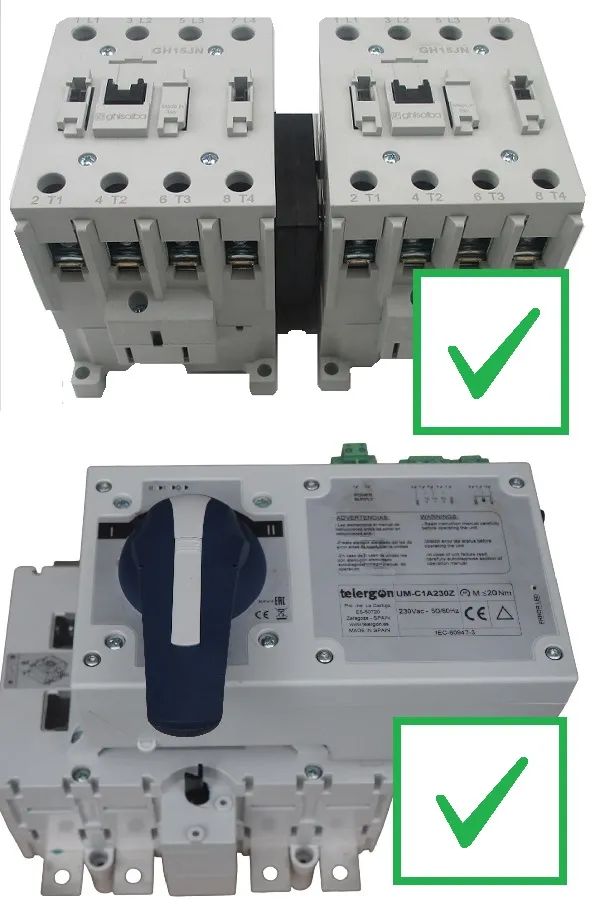
Think of an ATS panel as a junction with two inputs and a single output: the ATS controller constantly monitors incoming sources to ensure optimal performance. It easily interfaces with contactors or motorized switches [Image], backed by a robust internal input/output interface board.
Click the image to get Full Size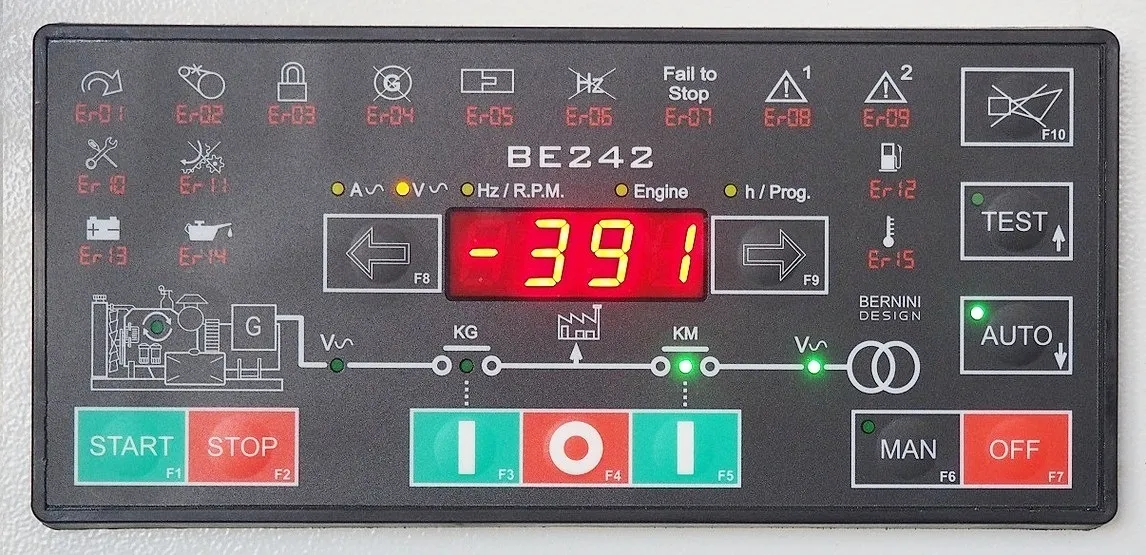
Easily interfaces with contactors or motorised switches
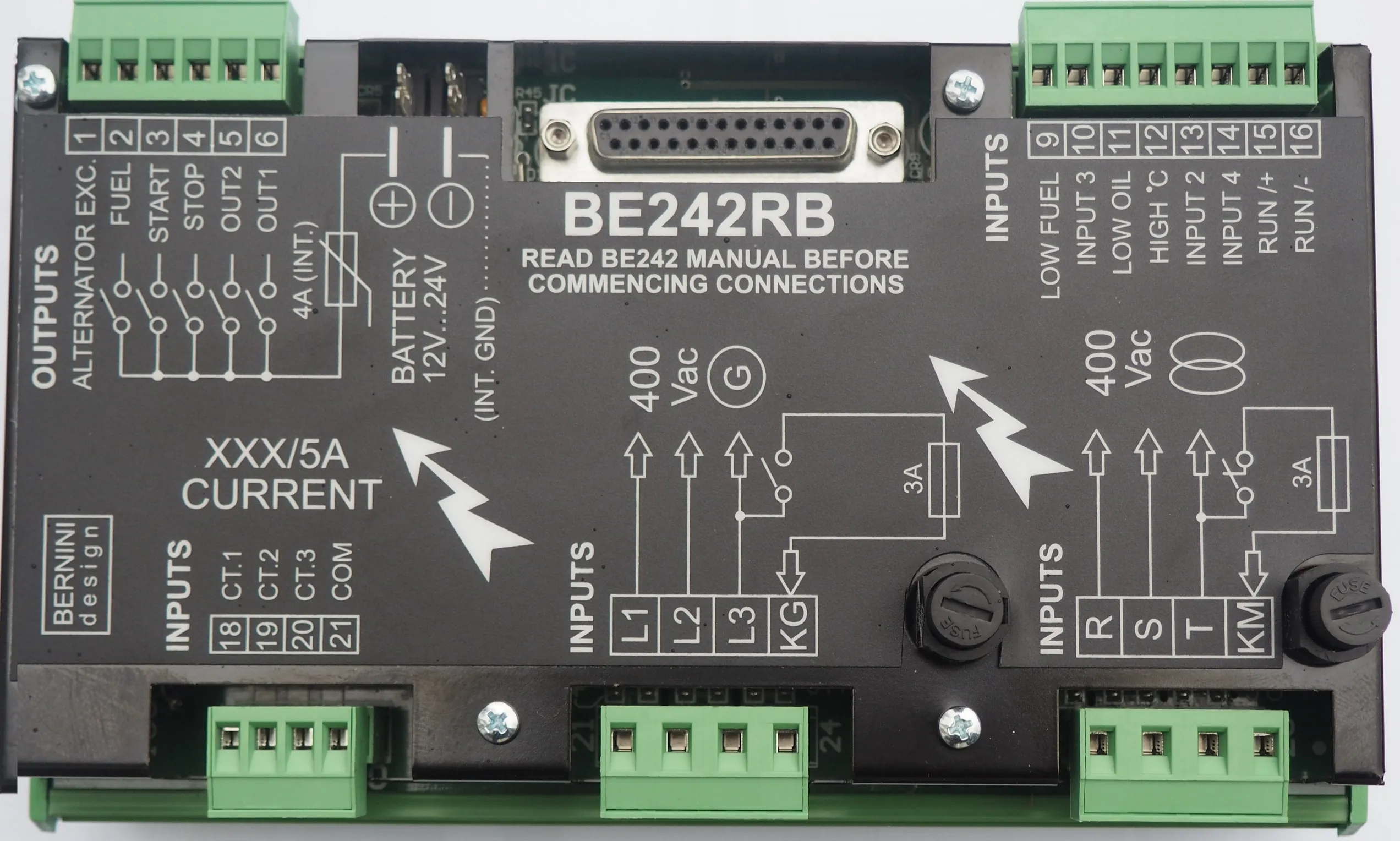
The ATS controller is paired a powerful input/output interface board.
Click the image to get Full Size
Why You Should Install an ATS Controller
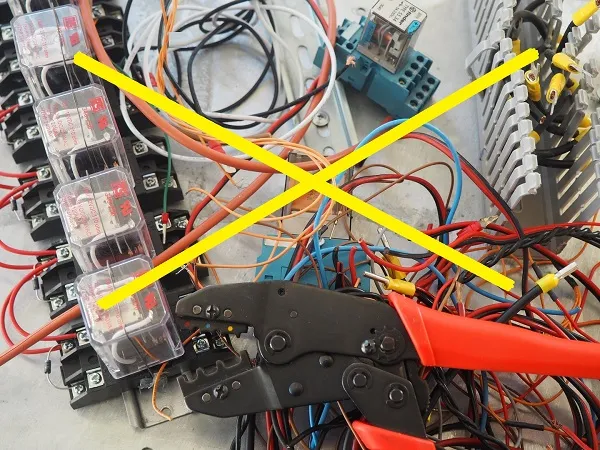
1) -Eliminate External Components: Remove the need for messy external relays or complex wiring when driving contactors or motorized switches
2) - Save Installation Time: Stop wasting hours on complex mechanical fabrication—installation often just requires a clean, single round panel cutout

3) - Integrate Older Equipment: Easily connect and automate second-hand or legacy generators safely
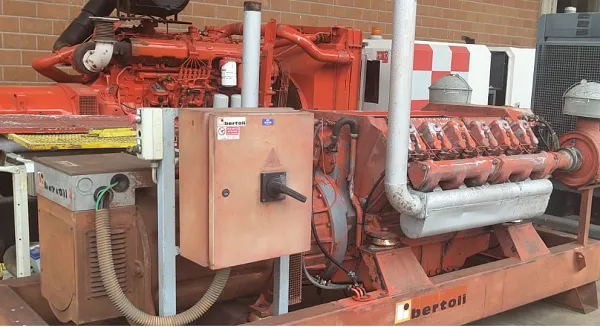
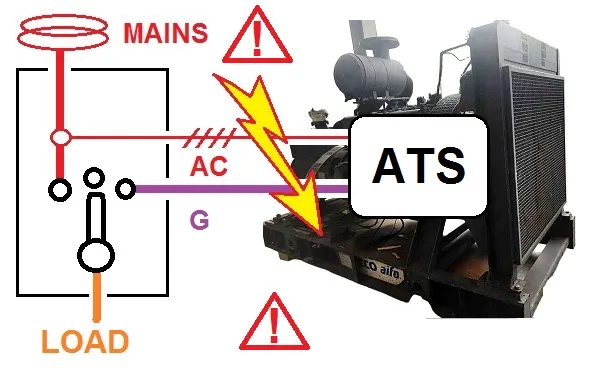
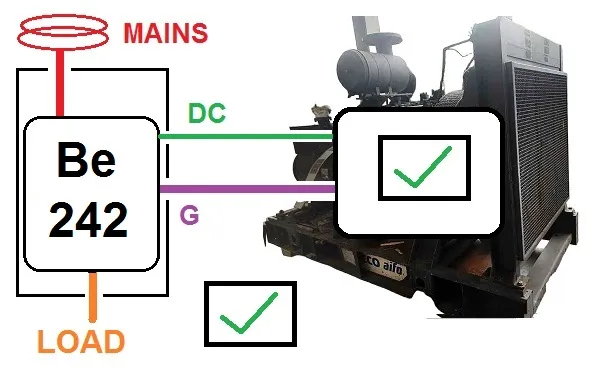
4) - Decouple Your Systems: Forget the obsolete practice of awkwardly integrating mains monitoring directly inside the generato
5) - Choose fail-safe and a long term reliability
How to Build an Automatic Transfer Switch Panel Using the ATS Controller
Traditional ATS controllers often require extensive cabling, complex connections, and numerous accessories. An ATS controller paired with a suitable interface board changes this, featuring a simplified, two-part design.
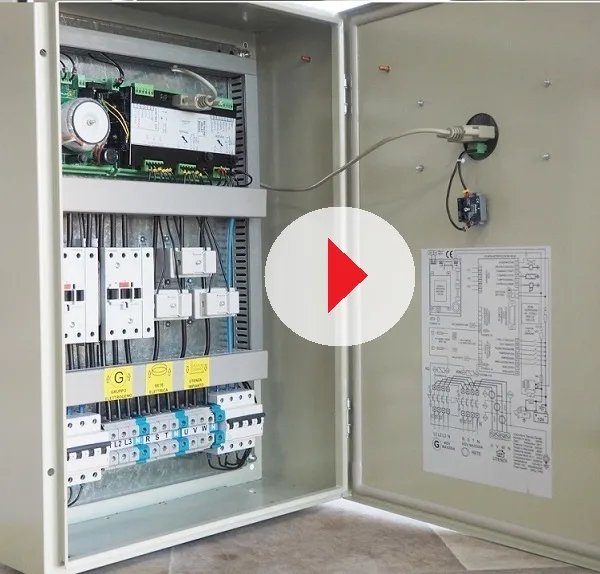
:By installing the interface relay board directly on the backplane, you streamline the connection of engine auxiliary circuits, drastically reducing assembly time. You will benefit from the following features:
Unmatched Efficiency: Reduce ATS panel assembly time by 50% and save up to 20 meters of wiring.
Space & Component Optimization: Eliminate the need for up to 5 traditional auxiliary relays; the design requires only a single round hole for mounting.
Universal Compatibility: Acts as a drop-in replacement for any AMF controller and interfaces seamlessly with both modern and legacy generator sets.
Robust Engineering: Designed for 30+ years of continuous service, with the CPU unit shielded securely behind the panel door.
Flexible Control: Features over 60 adjustable settings to handle any application, easily driving both contactors and motorized switches.
Reliability-First Design: We have prioritized physical durability and simplicity—no fragile LCD displays, just a straightforward, user-friendly interface.
Do you want to learn how to design and assemble automatic transfer switch (ATS) panels safely and professionally?
The e-book covers everything from wiring diagrams and component layout on the backplate to final testing and the mandatory pre-energization checklist.
Why is this guide essential for your work?
Designed with a practical, straight-to-the-point approach, this manual guides you through every phase of assembling an ATS panel. Whether you are optimizing manufacturing processes or just getting started with generator automation, here you will find the technical criteria, schematics, and checklists needed to avoid costly errors.
Exclusive Launch Offer
How to Build ATS Panels in a Short Time — E-book: 9.90 €
Take advantage of our launch offer: Get the e-book now. It is the perfect opportunity to test the hardware on your next project while saving time and money.
How to build ATS panels in a short time e-book 9.90 €
The e-book covers everything from wiring diagrams and component layout on the backplate to final testing and the mandatory pre-energisation checklist.
ATS Controller Tutorial
(Real-time fault detection and diagnostic protocols)
(Automated transition sequences and source prioritization)
(Managing complex load-sharing and distribution)
(Managing complex generator-sharing and distributio)
(Shielding sensitive electronics in heavy industrial environments)
Interface Board & I/O
(Streamlining auxiliary connections and relay management)
(Override procedures and direct operator control)
(Cutting panel build time and eliminating complex fabrication)
(Customizing parameters and adjusting settings for unique applications)
(Detailed electrical, physical, and operational parameters)
(Best practices for complete, ready-to-install assembly)
(Step-by-step schematics for mains, generators, and contactors)
Auto Mode
Simply push the [AUTO] push button of the ATS controller until the green LED illuminates. The engine starts and stops following excellent software.
The Contactor of the "PRIMARY SOURCE" (KM) opens after the BREAKER timing. After the warm-up time, if the voltage and frequency are within the settings, the circuit breaker of the "SECONDARY SOURCE" (KG) will close.
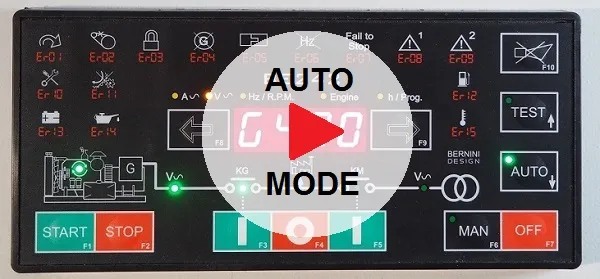 If the UTILITY POWER is restored, the KG will open. The KM will close following a programmed changeover timing. The Engine will stop after cooling downtime. If the engine shuts down, the KM closes independently of the "UTILITY POWER" status if the [P.48] is [ON] (NFPA-110 mode); otherwise, the KM will close only if the UTILITY POWER is within programmed settings. In AUTO mode, the BE242 will periodically test the engine. You must set parameters [P.41] and [P.42]. During this test, the AUTO mode green LED will continue to blink. The Be242 controller starts and stops the engine according to programmed inputs.
A "user-friendly" Manual Mode
All functions are intuitive. High-luminosity indicators guide you through each step in activating a contactor or starting and stopping the generator after (or not) a cooling-down time.
The MANUAL mode allows manual control of the engine and circuit breakers. Push the [MAN] push button to select the MANUAL mode. Push the [START] push button of the ATS controller until the engine starts; the display indicates the message [. . . .] during the starting attempts or [! ! ! !] if preheat has been programmed.
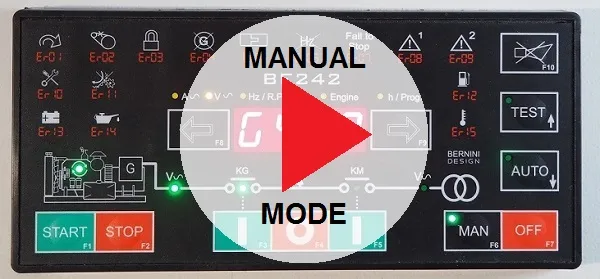 To transfer the Load to "UTILITY POWER", push the [I] (KM) push button (the [KG] will open). Push the [O] push button to open a Contactor. In manual mode, the CHANGEOVER timer lasts one second. The membrane push buttons are rated for an industrial environment and designed to last decades.
Simplicity in Programming
Although the ATS controller is delivered with defaults that meet all general-purpose applications, you can adapt the controller to your miscellaneous needs.
The ATS controller is user-friendly. The installation manual will help you install the panel. The ATS controller features default settings for a 400V 3-phase system. You can program the ATS controller on-site in a few minutes. You can arrange a dual-set configuration or a dual-load configuration.
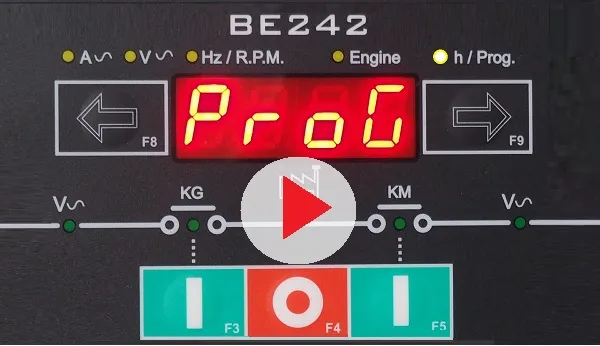
The ATS controller features over 50 adjustable settings, including various Input/Output options. In other words, you can adapt the controller to old-fashioned or second-hand engines. You do not need external tools for programming.
The ATS controller accepts single or three-phase voltage for the utility power and generator. You can choose single-phase or three-phase configurations. To drive the motor of the transfer switch, connect the KM and KG outputs as indicated in the wiring diagram. The battery supplies the ATS controller's electronic circuits. You can use the ATS controller for up to 1000kVA electrical systems.
As you can see from the following picture, the electronics, critical parts of the ATS controller, are outside the panel, far away from the powerful noise generated by electrical components.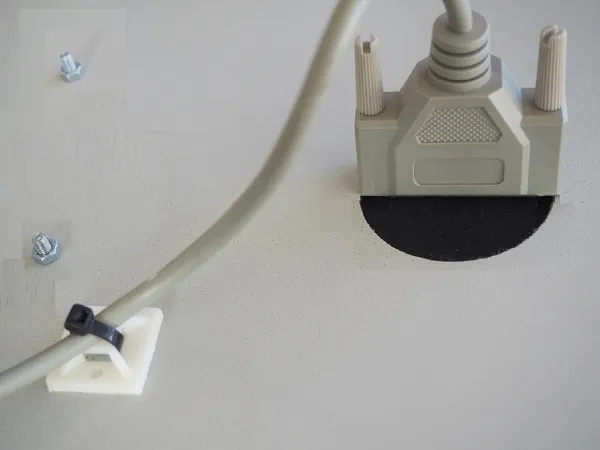
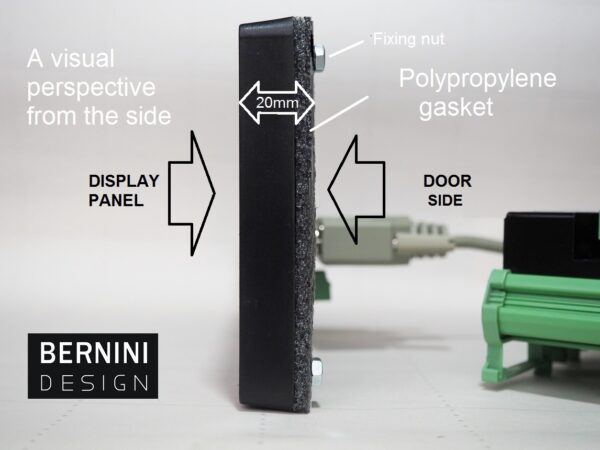
A 20 mm-Thick ATS Controller
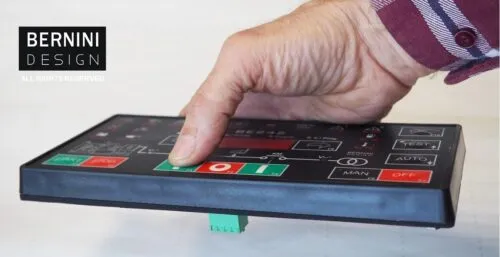
You will fix the controller on the door of the ATS panel by making 4 holes. You will make a round hole for the interconnection cable we supplied. No square hole is required. It is a 5-minute job. The ATS controller will benefit from the metal door plate shielding effect.
Thanks to the ATS cable, you can no longer wire connections to the rear door panel.
The relay board includes auxiliary relays and short-circuit-proof components. To make a professional Automatic Transfer Switch panel, you only require a metal or plastic cabinet, a battery charger, current transformers, and contractors. The configurable INPUT-OUTPUT options allow you to choose the best solution.
The ATS Controller Interface Board Tutorial
The controller on the front door features an ATS interface cable. This is connected to the Relay Interface Board. The module board features all removable connectors needed to interface with the engine, the generator, the mains, and miscellaneous input-output lines.
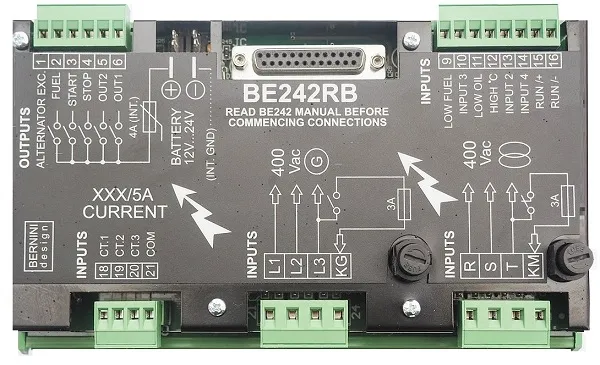
The label on the top of the module indicates all functions. The board is supplied from the engine's battery via automotive blade terminals. The following sections will explain all the details.
INTERFACE BOARD WITH COMPACT DIMENSIONS
This ATS controller, rail-mount, board interface features a metallic cover. Electric noise generated by the changeover will not affect the accuracy of the electrical measurements.
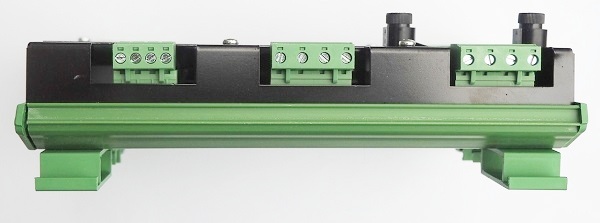
This ATS controller interface board includes 7 relays committed to driving the engine auxiliary circuits and the changeover coils.
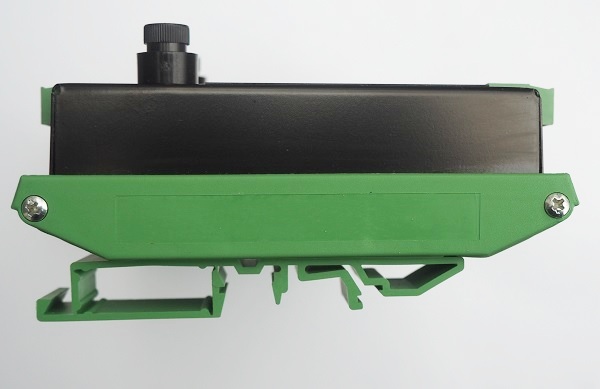
The board features electronic fuses and glass fuses to protect the coils of the changeover. The installation of this board drastically reduces the component count of your bill of materials. Not to mention the time you save assembling this item. The total weight is about 500 grams.
ATS CONTROLLER INPUTS
The ATS controller interfaces with all kinds of switches. The extension board offer 3 fully configurable inputs. For each input, you can choose one of the 28 options. By default, input 3 is configured to "REMOTE ENGINE TEST INPUT".
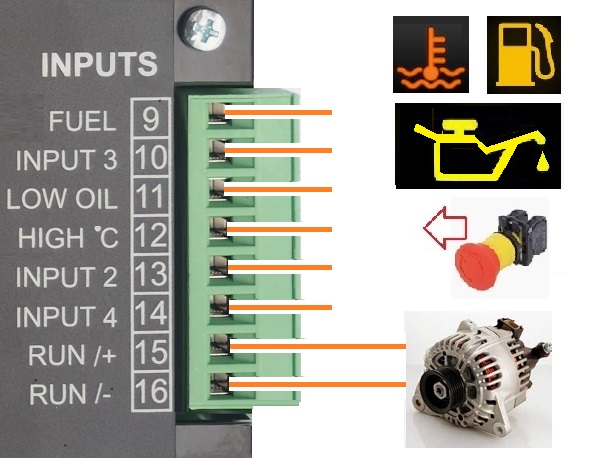
In the same way, input 2 is configured as "REMOTE LOCK INPUT", while input 4 is configured as "MAINS SIMULATED INPUT". All inputs are protected against overvoltages, AC voltage up to 50V, and reverse polarity. For each input you can choose one of the 28 available options.
ATS CONTROLLER RELAY OUTPUTS
The ATS controller DC outputs feature short-circuit-proof relays. The outputs are designed for driving automotive relays. The total current delivered by the outputs may not exceed 4 amps. Over this current, the ATS controller triggers the output short-circuit protection.
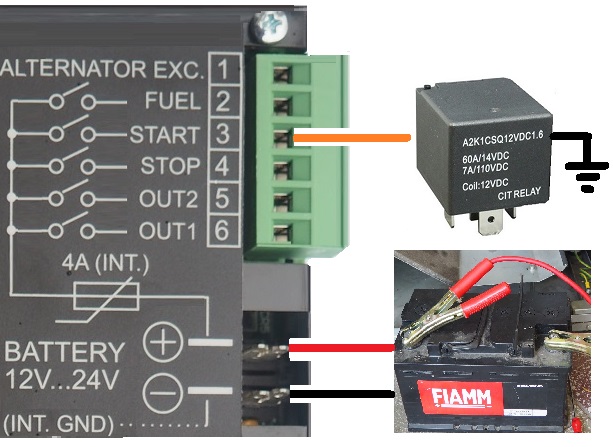
OUTPUT 1 is programmed by default as "ALARM OUTPUT". You can connect a sound alarm. The OUTPUT 2 is programmed by default as "PREGLOW". You may install a pilot relay to start a diesel engine. For each programmable output, you can choose one of the 60 available options.
The VOLTAGE MEASUREMENTS
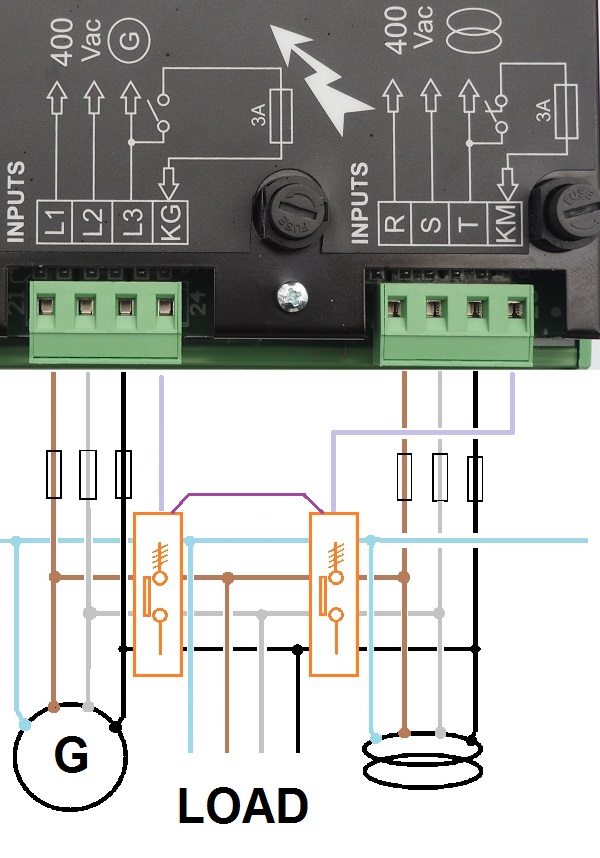
The ATS controller directly interfaces with GENERATORS and UTILITY POWER LINES up to 600VAC. The fuses indicated in the picture are mandatory. These fuses (or a circuit breaker as an option) protect the wires in case of a direct short-circuit.
The CURRENT MEASUREMENTS
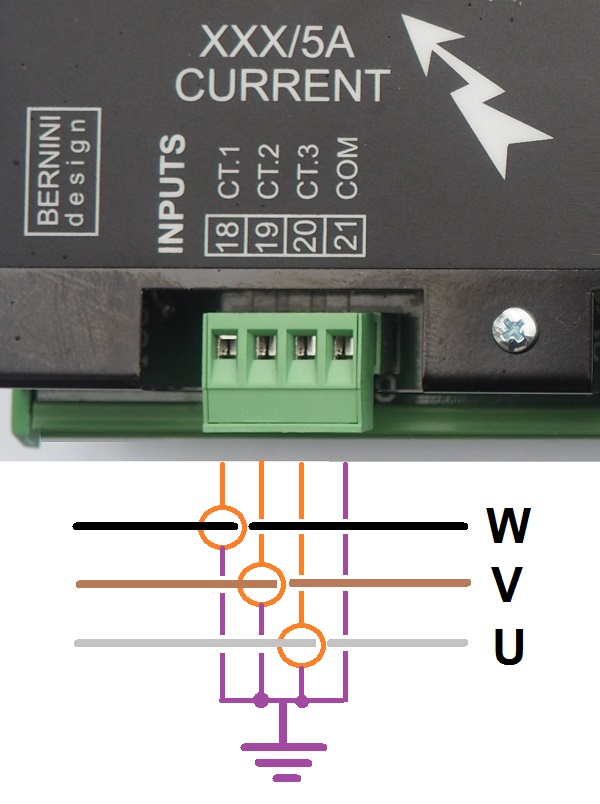
We always recommend installing CURRENT TRANSFORMERS of a suitable size. You will have a precise measurement of the current that flows in your LOAD, and you can set warnings and shutdowns in case of an OVERLOAD.
ATS Controller Alarms Monitoring Overview
The ATS controller features Shutdowns (the engine stops) and Warnings (the engine will continue to run) and provides:
- - a general indication of alarm presence using the message [ALAr.] on the display
- - 2 configurable outputs for specific alarm indications with more than 40 options
- - symbols on the front panel to indicate the most important alarms
- - display messages indicating warnings and shutdowns
- - a push button to silence the Horn ([ACK-F10])
Terminal #6 is pre-configured for HORN output. A HORN should be externally provided. To silence the HORN, push the [ACK-F10] push button or wait for the [P.50] to expire. If the [P.50] is set to [OFF], the only way to silence the Horn is by using the [ACK-F10] push button.
To browse the alarm memory, push the [→F9] push button. To display alarm details, push the [←F8] push button. To clear the alarm from the panel, remove the cause of the alarm and then press the [OFF] push button.
ATS Controller Specifications
DC Supply: 5.5/30Vdc, 50/150mA
Protection: 500mA thermal fuse
Cpu Dimensions: 194 X 146 X 205 /Cut-out: Round 60mm
Interface Board Dimensions: 210 X 150 X 80 (mm)
Operating temperature: -30 to +70°C / HR: 90% n.c.
Weight: Cpu/300 gr. Board/600 gr.
Installation: Cpu/Panel Door, Board/DIN-rail
Compliiance: ECC 89/336, 89/392, 73/23, 93/68, IEC 68-2-6
Display: 4 digits and 13 LED
Push Buttons: 12 Silver-Membrane
Settings: Over 60 / adjustable
Protection: internal 3A thermal fuse
Temperature: -30 deg C up to +70 deg C.
Compliance ECC 89/336, 89/392, 73/23, 93/68, CE
DC Relay Outputs: 3A 30VDC.
AC Relay Outputs: 8Amp 250V AC
Output Fuses: 2Amp
Connectors: removable terminal blocks
Operating Vac: up to 600Vac
Overvoltage Voltage: 2KVac
CTs: up to 1000/5Aac
Looking for specifications and pricing? Explore the
Bernini Design ATS Controller Offer.
Bernini Design Srl
Industrial Park
46035 Ostiglia (Italy)
bernini@bernini-design.com
+39 335 70 77 148